
















In Australia, the wiring rules (AS/NZS 3000) divide a bathroom into zones around the bath and shower, and the closer a light sits to water, the more protection against water it needs. That protection is shown by the fitting's IP rating. Which zone a position falls into, and the rating a fitting needs there, is confirmed by the licensed electrician who installs and certifies the work, so the aim of this guide is to help you choose fittings that are likely to suit before you talk to them.
We explain the zones in plain English, what the IP numbers on our bathroom lights mean, and how heaters and exhaust fans fit in. We have deliberately left out zone measurements: they depend on your bath, shower and ceiling, and they are exactly what your electrician measures on site.
Why bathrooms have zones
Water and electricity are a dangerous mix, and a bathroom is the room where they meet most often. Rather than treat the whole room the same, the wiring rules map out the areas where water is most likely to reach a fitting: inside the bath or shower, directly above it, and the space around it. Each area has its own requirements for what can be installed there and how well it must be sealed.
The practical result is simple. A light above the shower needs far more protection than a light by the door, and some places should not have a light fitting at all.
The zones in plain English
The standard numbers the zones outward from the water, starting at zero. The table below describes them in general terms only. The exact boundaries, and how they change for showers without a base, fixed screens or sloping ceilings, are set out in AS/NZS 3000, and your electrician will confirm the zone for every position.
| Zone | Roughly where it is | What it usually means for lighting |
|---|---|---|
| Zone 0 | Inside the bath or shower base, where water collects | Not a place for ordinary light fittings. Ask your electrician before planning anything here. |
| Zone 1 | The space directly above the bath or shower | Only fittings sealed and rated for this zone, and only where your electrician confirms they are suitable |
| Zone 2 | A band around the bath and shower, including beside the shower opening | Splash-rated fittings, subject to your electrician's confirmation of the rating needed |
| Outside the zones | The rest of the bathroom, further from the water | More choice, although steam and condensation still matter |
Vanity basins are treated differently from baths and showers, which is why a splash-rated vanity light above the mirror is the normal arrangement. If your bathroom is unusual, for example an open walk-in shower or a bath under a sloping ceiling, the zones can extend further than you expect. That is a conversation for your electrician before you buy.
What the IP rating tells you
IP stands for ingress protection. The first digit is protection against solids such as dust, and the second is protection against water. Higher numbers mean more protection. An "X" in place of a digit means that part was not rated. Our guide to what an IP rating is has the full chart.
The ratings you will see most often on bathroom products are:
- IP44. Protected against splashing water from any direction. This is the rating on most vanity lights and many bathroom downlights.
- IP65. Dust tight and protected against water jets from any direction. Wet-area downlights carry this rating so they can sit closer to the shower.
- IPX2. A low water rating that you will find on many bathroom heaters and exhaust fans. These are ceiling appliances, positioned according to their instructions and your electrician, not shower fittings.
- IP20. No water protection. Typical of standard indoor downlights and oysters, and not intended for wet positions.
Choosing fittings zone by zone
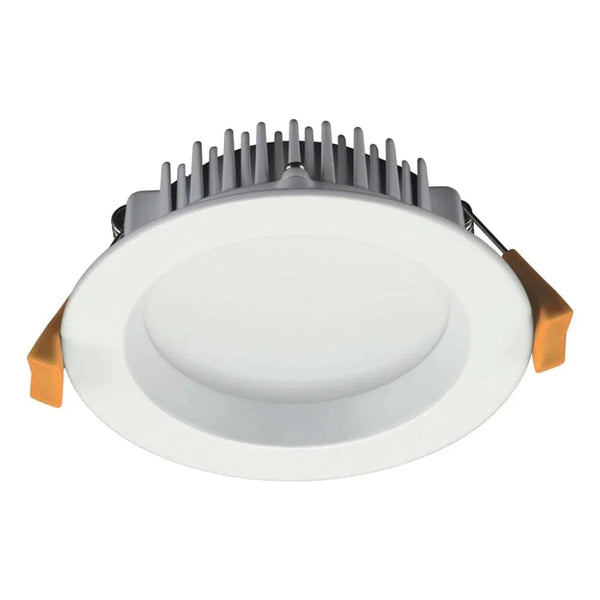
Above the shower or bath. This is where a sealed wet-area downlight earns its place. The Domus AQUA-13 is rated IP65 and its product page lists bathrooms, ensuites and above a bath among its uses, while noting that your electrician still sites it to the zones in AS/NZS 3000. It also has a colour rendering index above 90, which helps when you are looking at your own face in the mirror. Its colour temperature is set on a dip switch before installation, so decide that first.
Around the vanity. Most vanity lights are IP44. The Telbix Foley 80 is an 800 mm IP44 bar for above a mirror, with a built-in 20 W LED producing 1,155 lumens and a switch that selects 3000K, 4000K or 5000K before mounting. It is not dimmable and needs an earth, both details your electrician will want to know. For a wider mirror, the Oriel SOLUS.120 is a 1200 mm IP44 vanity light at 4000K and 1,550 lumens. Browse the full range of vanity lights, and see our bathroom vanity lighting guide for placement and mirror sizing.
The rest of the room. Away from the bath and shower, you have more freedom. A splash-rated fitting is still a sensible choice in a small bathroom that fills with steam, and an IP rating on the box takes the guesswork out of it. The bathroom lighting collection brings these fittings together.
Heaters and exhaust fans
Three-in-one and six-in-one heater units are large ceiling appliances, and their water ratings are usually low. The Domus INFINITY 6-in-1 is rated IPX2, and its product page describes it as a ceiling appliance rather than a shower-zone fitting, to be sited by your electrician to the zone requirements in AS/NZS 3000. It must also be ducted outside through a 150 mm duct, not into the roof space.
Exhaust fans follow the same logic. The Martec Flow exhaust fan is rated IPX2 and comes in plug-in and hard-wired models, with ducting sold separately. Browse exhaust fans and bathroom heaters, and read our bathroom exhaust fan guide for sizing.
Before you call your electrician
You will get a better result, and fewer surprises, if you arrive with a plan. Here is what to prepare:
- A simple floor plan showing the bath, shower, vanity and door, and the ceiling height.
- The fittings you have in mind, with their IP ratings, so your electrician can confirm each one suits its position.
- Where you want switches and controls. Switches and power points have their own placement rules in a bathroom.
- Heater and exhaust details, including the cutout size, the duct size and where the duct will exit the building.
- Any colour temperature settings that are set by dip switch before installation.
All fixed wiring in an Australian bathroom must be installed by a licensed electrician, who will also test the work and provide the certificate required in your state or territory. Choosing well-rated fittings makes their job easier, but the zone decision is always theirs.
Frequently asked questions
Can I use a normal downlight in a bathroom?
Possibly, in a position well away from the bath and shower, but many standard downlights are rated IP20 and have no water protection. A splash-rated or wet-area downlight is the safer choice, and your electrician will confirm what each position needs.
What IP rating do I need above a shower?
Above a shower is one of the most demanding positions in the house. Choose a sealed wet-area fitting such as an IP65 downlight, and have your electrician confirm it suits that zone before it is installed.
Is IP44 enough for a bathroom?
IP44 means protection against splashing from any direction, which is why it is the usual rating for vanity lights above a basin. Whether it is enough for a particular spot depends on the zone, which your electrician will confirm.
Can a bathroom heater go above the shower?
Many heater units carry a low water rating, such as IPX2, and are designed as ceiling appliances rather than shower fittings. Follow the installation instructions and your electrician's advice on where it can go.
Can I install bathroom lights myself?
No. In Australia, wiring a light fitting is electrical work that must be done by a licensed electrician. You can choose the fittings and plan the layout, and they will install, test and certify it.
Do bathroom zones apply to the laundry or powder room?
The zones are built around baths and showers. A powder room with only a basin is a different situation, but splash-rated fittings are still a sensible choice near water. Ask your electrician if you are unsure.
Plan your bathroom lighting with us
This guide comes from Lights For You, a lighting retailer with a showroom in Ashfield, Sydney, and you are welcome to bring your plan into our Ashfield showroom so we can check IP ratings and sizes with you before you book the install.