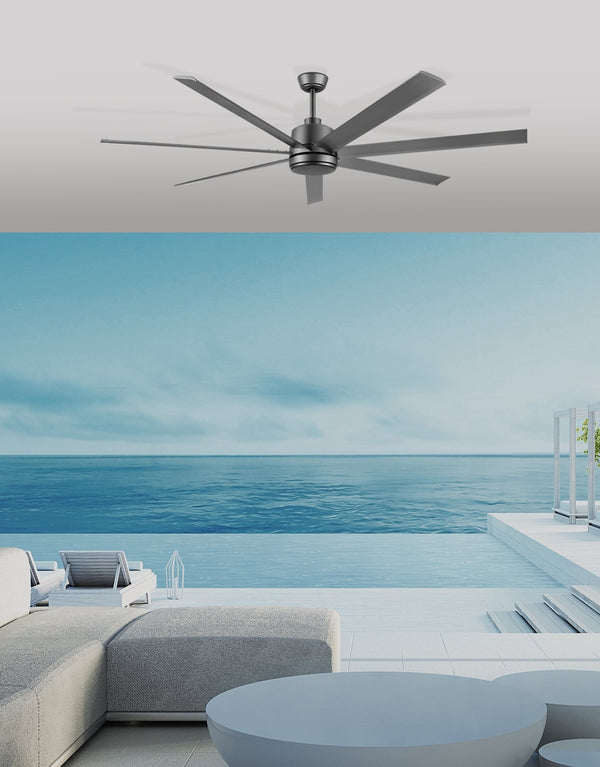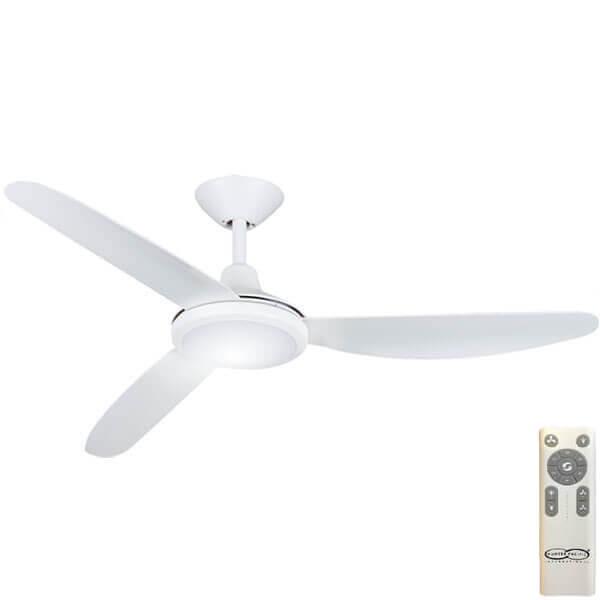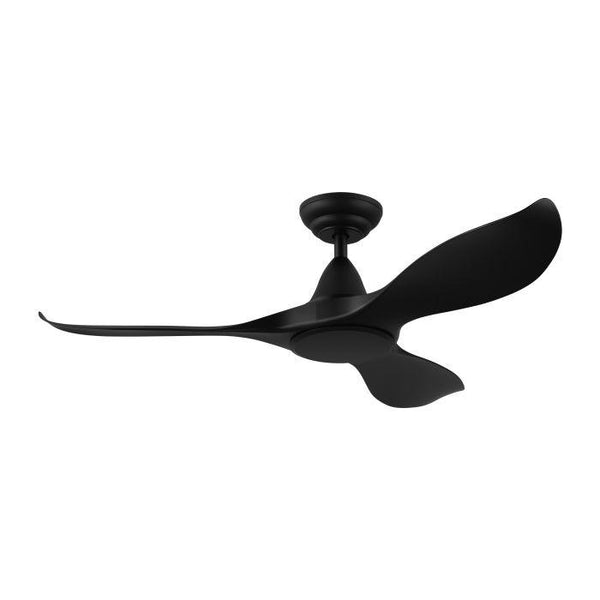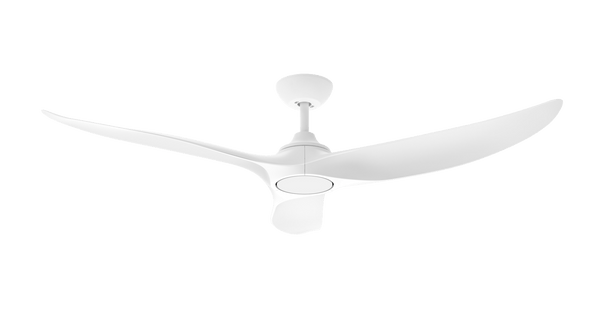



















The right outdoor ceiling fan depends on how exposed your space is. For a covered alfresco, patio or verandah that stays dry, a fan sold for covered outdoor use is usually enough. If rain can blow in, the area is humid, or you live near the coast, step up to a fan with an IP rating (IP55 or IP66), UV-stable blades and corrosion-resistant fittings. This guide explains the difference, what the IP numbers actually mean, and how to size and choose a fan for your outdoor area.
When you are ready to compare, you can shop outdoor ceiling fans or work through our Fan Selector to narrow the range by room, motor, size and light.
Three kinds of outdoor space, three levels of fan
"Outdoor" covers a lot of ground, and the label on the fan matters more than the word "outdoor" in a product title. Start by working out which of these describes your space.
Covered and dry. A patio, verandah or alfresco with a solid roof and walls or screens that keep most weather out. Fans described as "indoor / covered outdoor" are designed for this. Examples in our range include the Ventair Glacier DC and the Eglo Surf DC with LED light and remote, both listed for indoor and covered outdoor locations.
Open to weather or humid. A pergola with slatted cover, a deck where rain blows in sideways, a pool area, or anywhere damp air hangs around. Here you want a fan with a stated IP rating, because moisture will reach the motor housing and fittings.
Coastal. Salt air corrodes metal fixings and finishes far faster than ordinary weather. Within reach of sea spray, look for a fan sold for coastal use, with a high IP rating and UV-resistant construction, and plan to wipe it down regularly.
What an IP rating means on a ceiling fan
An IP (Ingress Protection) rating has two digits. The first says how well the fan is protected against dust and solid objects, and the second says how well it is protected against water.
- IP20 is an indoor rating. It guards against fingers and larger objects but offers no protection from water.
- IP55 is protected against dust and against water jets from any direction. It suits outdoor and wet areas such as an exposed patio or a pergola.
- IP66 is fully dust-tight and withstands powerful water jets, the highest rating you will usually see on a ceiling fan. It is the one to look for in coastal and high-humidity positions.
Two things worth knowing. First, many fans that are perfectly suited to a covered patio do not list an IP rating at all, so read the product page to see whether the fan is intended for covered areas only or for exposed ones. Second, the number alone is not the whole story: UV-resistant blades, sealed motor housings and quality fixings decide how a fan looks after a few summers. For a deeper explanation of the scale, see our guide to IP ratings in lighting and ceiling fans.
Blades, finishes and motors that cope outdoors
Blade material. Timber and MDF blades can absorb moisture, swell and warp when they live outside. Moulded ABS, polymer and composite blades do not absorb water, and UV-stabilised versions resist the fading and brittleness that strong Australian sun causes. Always go by the material described on the product page.
DC motors. A DC motor runs cooler, quieter and with finer speed control than an AC motor, which suits long evenings outside. Several of our outdoor-suitable DC fans list very low draw on the lowest speed: Eglo's Tahiti lists as little as 2.9 watts on its lowest setting, and the Ventair Glacier lists 3.5 watts on its lowest speed. For the full comparison, read our guide to AC, DC and EC ceiling fan motors.
Finishes. Powder-coated and treated metal finishes last longer outdoors than untreated ones. Near the coast, rinse the fan with a damp cloth every few months to remove salt build-up.
What size outdoor fan do you need?
Outdoor air is not contained by walls, so a fan has to work harder to be felt, and it is usually worth going one size up from what you would choose for the same floor area indoors. As a rough guide, a small covered patio around 3 by 3 metres suits a fan of about 48 inches (1220 mm), a typical 4 by 4 metre alfresco suits 52 to 56 inches (1320 to 1420 mm), and large entertaining areas suit 60 inches (1524 mm) or more, or two fans spaced along the length of the space.
If the roof is raked or the ceiling is high, you will also need a downrod, and you should check the fan's maximum mounting angle, because many fans cannot be hung from a steep slope. Ventair lists 15 degrees for the Glacier and up to 18 degrees for the Spyda, for example. Our ceiling fan size guide covers sizing and downrod lengths in detail.
Outdoor fans worth a look from our range
For coastal and exposed positions. The Eglo Tahiti DC is IP66 rated with UV-resistant construction and comes in 52 and 72 inch spans, with or without a tri-colour LED light. The product page lists it for coastal, outdoor undercover and high-humidity installations.
For wet and outdoor areas with a light. The Eglo Kurrawa 60 inch DC is IP55 rated with an integrated 20 watt tri-colour LED (3000K, 4000K or 5000K) and a remote. A 72 inch version suits larger spaces.
For an exposed patio without a light. The Mercator Guardian 56 inch IP55 DC is a fan-only model in black with dark timber-finish blades.
For covered alfresco areas. The Ventair Spyda DC 1250 mm and Glacier DC 1300 mm are listed for indoor and covered outdoor use, each available with or without a light. They are a sensible choice for a roofed patio that stays dry.
Lights, remotes and installation
Many outdoor-suitable fans come with an integrated LED, and a tri-colour (CCT) light lets you switch from a warm glow for dinner to a cooler white for the kids' homework. A handheld remote controls speed, direction and, on many models, the light and a timer, and it keeps wall switches off an exposed post or wall. Our guide to ceiling fans with lights and remotes explains the options.
Ceiling fans are fixed wiring, so installation must be done by a licensed electrician. Tell them where the fan is going so they can confirm it suits the position, and keep the manual and warranty paperwork. Installing a fan outside the environment it is rated for can affect your warranty cover, so check the terms before you fit it.
Frequently asked questions
Can I use an indoor ceiling fan outside?
No. An indoor fan has no protection against moisture, humidity or UV, and it can corrode, warp or fail early outdoors. Choose a fan that is listed for covered outdoor use at the very least, and an IP-rated fan for anywhere rain, spray or humid air can reach it.
Does an outdoor ceiling fan need an IP rating?
For a roofed, dry patio, a fan listed for indoor and covered outdoor use is generally fine. For exposed pergolas, decks, pool areas and anywhere humid, choose a fan with a stated IP rating such as IP55 or IP66.
What is the best outdoor ceiling fan for the coast?
Look for IP66 rating, UV-resistant blades and a finish designed for coastal conditions, such as the Eglo Tahiti. Wipe the fan down every few months to remove salt.
Do outdoor ceiling fans need a light?
No, but many people like one, because the fan then lights the space as well as cooling it. Most outdoor-suitable models are available both with and without a light.
What size fan suits a 4 by 4 metre alfresco?
A 52 to 56 inch (1320 to 1420 mm) fan suits most 4 by 4 metre areas. Go larger for bigger spaces, or fit two fans.
Ready to cool your alfresco?
Browse the full range of outdoor ceiling fans, or see how the main brands compare in our Hunter Pacific range guide. Lights For You delivers Australia-wide, and our Ashfield showroom in Sydney is open if you would like to see and compare fans in person before you buy.