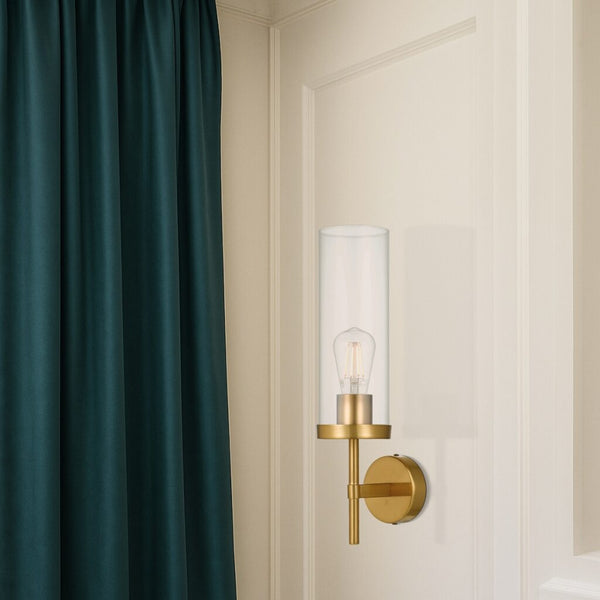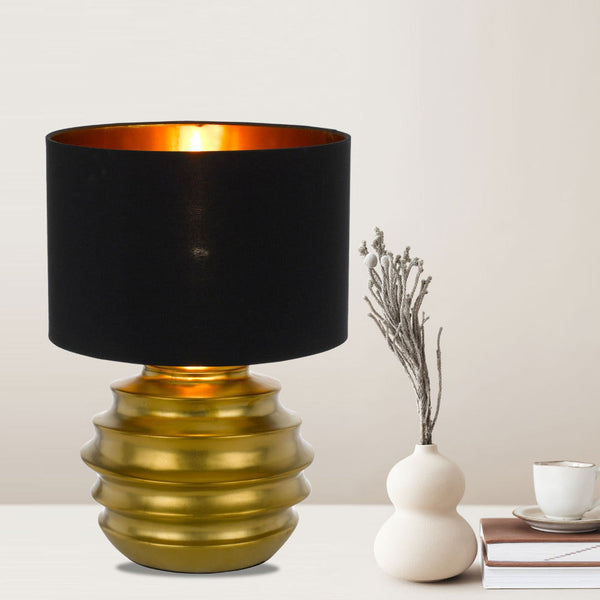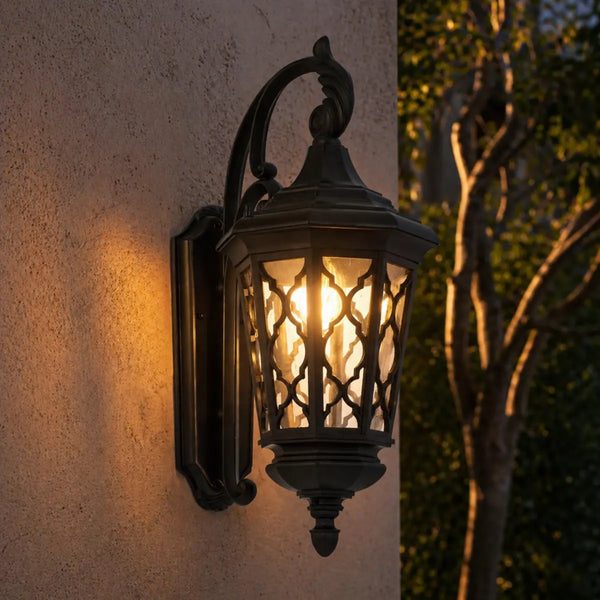

















To choose the right light globe, match the base first: the base is the part that fits the socket, and a globe with the wrong base simply will not fit. The common ones are E27 (standard screw), E14 (small screw), B22 (standard bayonet), B15 (small bayonet), GU10 (twist-lock pins on mains), G4 (small 2-pin, usually low voltage), G9 (small 2-pin on mains) and GX53 (flat puck). After the base, check brightness in lumens, colour temperature, and whether you need it to dim.
Browse the whole range of LED globes, or read on for what each fitting looks like and where it is used.
Light globe base types at a glance
| Base | What it is | Typical use |
|---|---|---|
| E27 | Standard Edison screw | Household lamps, pendants, bollards |
| E14 | Small Edison screw (SES) | Candle globes in chandeliers, wall lights, bedside lamps |
| B22 | Standard bayonet cap | Household fittings that take a push-and-twist globe |
| B15 | Small bayonet cap (SBC) | Candle and decorative globes in smaller fittings |
| GU10 | Two pins that twist and lock, runs on 240V mains | Downlights and spotlights |
| G4 | Small 2-pin base, commonly 12V | Compact decorative and low-voltage fittings |
| G9 | Small 2-pin capsule base, 240V | Small decorative fittings, wall lights and some pendants |
| GX53 | Flat puck-style base | Under-cabinet and surface fittings that take a puck globe |
The two mix-ups customers hit most
E14 versus E27, and B15 versus B22. The small bases are not interchangeable with the standard ones. A candle globe in E14 or B15 is the size used in chandeliers, wall sconces and bedside lamps, and it will not fit a standard E27 or B22 socket. Check the label on your old globe, or look at the socket, before you order.
Voltage on two-pin bases. A G4 globe commonly runs on 12 V DC, so it needs a matching driver or transformer, while a G9 and a GU10 run directly on 240 V. Check the voltage on the product page before you buy a replacement, and do not swap a 12 V globe into a 240 V fitting or the reverse.
Our popular globes, by fitting
E27 and B22: the household globe. The Domus LF-A60 is a dimmable LED filament globe in the standard A60 shape, delivering 1,055 lumens from 8.6 watts, in clear or frosted glass, E27 or B22. For a decorative look, the LF-ST64 pear shape and the LF-G95 spherical globe are dimmable LED filament globes in E27 or B22. The ST64 is rated for 15,000 hours, which is shorter than the 35,000 to 50,000 hours typical of most LED fittings, because the filaments sit in a sealed glass envelope. That is normal for a filament LED, so treat these as a decorative choice.
E14 and B15: candle globes. The Domus LF-C35 filament candle is a dimmable 4.8 watt candle in E14 or B15, clear or frosted, in 2700K or 6500K. It is one of our most popular globes, and a good replacement for chandelier and sconce globes.
GU10: downlights and spotlights. The Vencha GU10 tri-colour is a dimmable 8 watt globe with 3000K, 4000K and 6000K settings, and the Havit 9-in-1 GU10 offers three wattages and three colour temperatures in one globe. If a GU10 drops out of a downlight, it was most likely pushed in without being twisted home.
G9 and G4: small capsules. The G9 3W LED capsule gives 350 lumens at 360 degrees in a body just 16.5 by 50 mm, in warm, natural or cool white. It is not dimmable. Browse G9 globes and G4 globes for the full range.
GX53: the puck. The 6W LED GX53 globe comes in warm white 3000K or daylight 5000K. Stock is limited on this one, so check availability on the product page.
Lumens, colour temperature and dimming
Buy by lumens, not watts. Watts tell you how much power a globe uses, and lumens tell you how bright it is. The LF-A60, for example, produces 1,055 lumens from 8.6 watts, which an old incandescent would have needed around 75 watts to match. Our guide to understanding lumens explains the numbers.
Colour temperature. 2700K to 3000K is warm white, suited to living rooms and bedrooms. 4000K is a neutral white for kitchens and workspaces, and 5000K to 6500K is a cool daylight white. See our guide to colour temperature for every room.
Dimming. Only globes marked dimmable should be used on a dimmer, and the dimmer must be compatible with LED. A non-dimmable globe on a dimmer can flicker or fail early.
Changing a globe safely
Switch the light off at the wall and let the globe cool before you change it. Our light globe guide has a quick checklist for choosing a replacement. Changing a globe is a job you can do yourself, but any work on the fitting or its wiring must be done by a licensed electrician.
Frequently asked questions
What is the difference between E27 and B22?
E27 is a standard screw base, and B22 is a standard bayonet base that pushes in and twists. They are not interchangeable, so match the base to your socket.
What is the difference between E14 and B15?
Both are the small versions of their base type. E14 is a small screw base, and B15 is a small bayonet base. They are used in candle globes for chandeliers, sconces and bedside lamps.
Can I replace a halogen GU10 with an LED?
Yes, an LED GU10 has the same base. If your downlights are on a dimmer, choose a dimmable LED and check the dimmer is LED compatible.
Is a G4 globe the same as a G9?
No. Both are small 2-pin bases, but a G4 commonly runs on 12 V and a G9 on 240 V. Check the voltage before you buy.
Why does my LED globe flicker?
The most common cause is an LED on a dimmer that is not compatible with it, or a non-dimmable globe on a dimmer. Use a dimmable globe and an LED-compatible dimmer.
Find the right globe
Browse all LED globes. Lights For You delivers Australia-wide, and our Ashfield showroom in Sydney is open if you would like help matching a globe to your fitting.