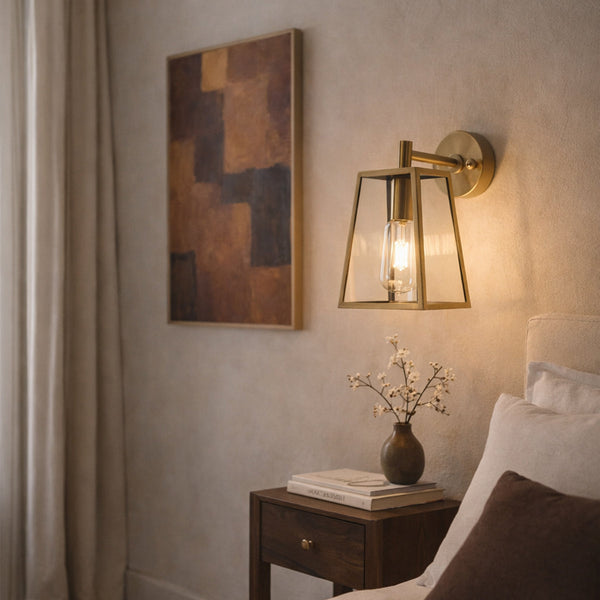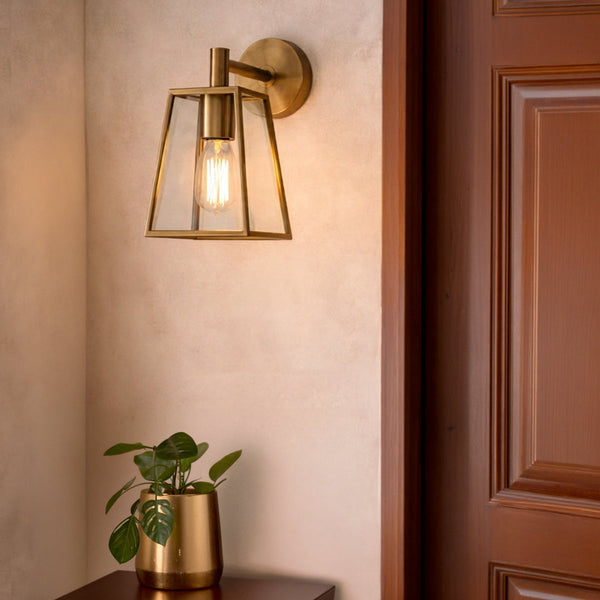
















Outdoor wall lights do more work than almost any other fitting on your home. They mark your entry, wash light across a facade, keep pathways and steps safe after dark, and set the mood over an alfresco dinner — all while standing up to sun, rain, salt and dust year after year. Choosing well means balancing style, performance and durability, and the good news is that it is not complicated once you know what to look for. This guide walks you through every decision, from the look you want to the technical details that keep a fitting working for the long haul.
The main styles of outdoor wall lights
Exterior wall lights fall into a handful of recognisable families, and most homes end up mixing two or three of them across the property.
- Up/down wall lights. These throw a beam both upward and downward, creating two clean bands of light on the wall and a modern, architectural effect. They are the go-to for contemporary facades, rendered walls, feature columns and alfresco areas. Many are adjustable so you can fine-tune the spread.
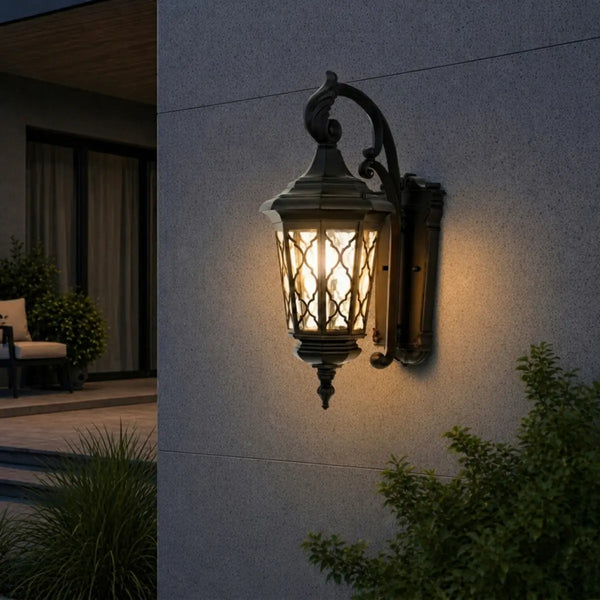
- Coach lights and lanterns. The classic choice for traditional, Hamptons, Federation and cottage-style homes. A coach light (also called a coachlight) frames a doorway or garage with a timeless lantern silhouette, often in a black or bronze finish with clear or seeded glass.
- Bunker lights. Robust, low-profile fittings with a caged or ribbed cover, originally designed for industrial and marine use. They suit modern and coastal homes, sit flush against the wall and shrug off harsh conditions, which makes them popular for garages, sheds and side passages.
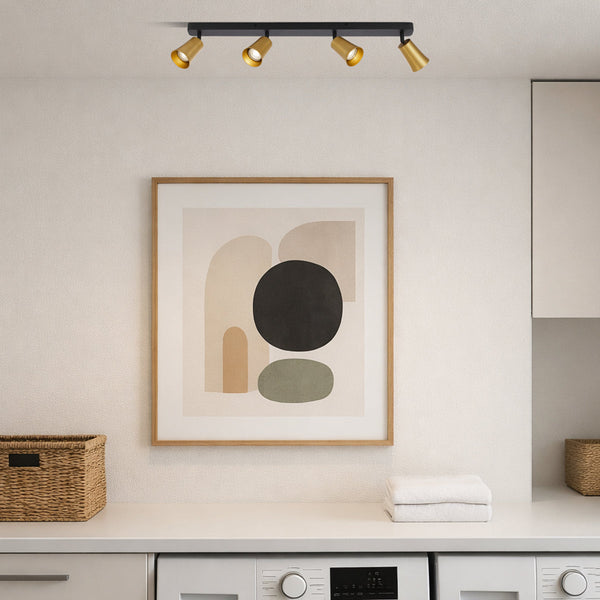
- Exterior spotlights. Directional fittings, single or twin-head, that let you aim light exactly where it is needed — onto a wall, a garden bed, a tree or a driveway. Twin adjustable spots are a versatile, security-friendly option.
Where to use them around the home
Matching the fitting to the location is the fastest way to get a result you will be happy with.
- Front entry and porch. This is your first impression. A coach light or up/down fitting either side of the door creates symmetry and welcoming light. If space only allows one fitting, centre it above or beside the door at head height.
- Alfresco and outdoor living. Warm, glare-free light makes an entertaining area feel comfortable. Up/down lights and wall-mounted spots work well here, ideally paired with a dimmer.
- Garage and driveway. Flank the garage door with a matching pair to light the approach and add presence to the facade. Bunker lights and spots handle the practical, high-traffic role.
- Facades and feature walls. Up/down fittings and spotlights graze textured render, stone or timber to highlight the architecture at night.
- Side passages and service areas. Durable bunker lights, often with a sensor, keep narrow and rarely-visited spaces safe.
IP ratings: the number that matters most outdoors
Every outdoor fitting carries an IP (Ingress Protection) rating — two digits describing how well it resists solids and water. The second digit is the one to watch for exterior use. As a rule of thumb, look for a minimum of IP44 for sheltered spots such as a covered porch, and IP54 or higher for fully exposed walls that cop wind-driven rain. Fittings intended for the harshest positions climb higher still. Always check the rating against how exposed the location actually is, rather than assuming any “outdoor” light will suit any position.
Coastal homes and 316 marine-grade stainless
If you live near the coast — and a huge share of Australian homes do — salt in the air is the single biggest enemy of an exterior fitting. Salt corrosion can pit and stain lesser materials within months. For coastal and near-coastal properties, look for 316 marine-grade stainless steel, which offers markedly better salt resistance than the more common 304 grade, or choose quality powder-coated aluminium and solid brass, which weathers gracefully. Copper and brass fittings will patina over time, a look many owners actively want. Whatever the material, rinsing fittings with fresh water periodically extends their life considerably in a salt environment.
Sensors and security
A motion sensor turns a decorative fitting into a genuine security feature. Sensor-equipped wall lights switch on automatically as someone approaches, deterring unwanted visitors and lighting your own path home hands-free. You can buy fittings with an integrated PIR sensor, or wire a separate sensor to control standard lights. Twin spotlights with a sensor are a classic security combination for garages, side gates and back yards. Position sensors to cover the approach without being triggered constantly by the street or a busy footpath.
Colour temperature: getting the mood right
Colour temperature, measured in Kelvin (K), controls whether light feels warm or cool. For homes, warm white (around 3000K) is the most popular choice outdoors — it flatters brickwork, render and timber, feels inviting at the entry, and suits relaxed alfresco entertaining. Cool white (around 4000K or higher) reads as brighter and more clinical, and is sometimes preferred for security-focused or utility areas. Many current fittings are tri-colour or CCT-selectable, letting you switch between warm and cool via a small switch on the fitting, which is handy if you are undecided. For a cohesive look, keep the colour temperature consistent across the front of the house.
Sizing and placement
Scale is where a lot of exterior lighting goes wrong — fittings that look fine in the box can disappear against a large facade. As a general guide, a wall light beside a single door should be roughly one-quarter to one-third the height of the door. When flanking a double garage or wide entry, step up a size. Mount fittings at a comfortable height, commonly around 1.6 to 1.8 metres to the centre, so the light source sits near eye level and does not glare. Where you are installing a pair either side of a door or garage, measure carefully so both sides are mounted at exactly the same height and distance for a balanced, deliberate result.
Finishes that last
Finish is both an aesthetic and a durability decision. Matte black is the dominant contemporary choice and suits almost any palette. Dark bronze and antique brass lean traditional and Hamptons. Stainless and gunmetal read modern and coastal. Whichever you choose, a quality marine-grade powder coat or genuine corrosion-resistant metal will hold up far better than a thin decorative finish. Aim to coordinate the finish with your door hardware, house numbers and other exterior fittings so the whole entry feels considered.
Your outdoor wall light checklist
- Is the IP rating suitable for how exposed the position is?
- For coastal homes, is it 316 stainless, brass or quality powder-coated aluminium?
- Does the style match the architecture of your home?
- Is the fitting the right scale for the door, garage or wall?
- Warm white for ambience, or cool white for security — or a selectable option?
- Do you need a built-in or separate motion sensor?
- Are you mounting a matched pair at equal height either side of the door or garage?
- Does the finish coordinate with your other exterior hardware?
Frequently asked questions
What IP rating do I need for outdoor wall lights?
For sheltered, undercover positions IP44 is generally the sensible minimum, while fully exposed walls call for IP54 or higher. Match the rating to how much rain and wind the spot actually receives.
Which outdoor wall lights are best for coastal homes?
Choose fittings made from 316 marine-grade stainless steel, solid brass or quality powder-coated aluminium, as these resist salt corrosion far better than standard materials. Rinsing them with fresh water occasionally helps them last even longer.
Should outdoor wall lights be warm or cool white?
Warm white around 3000K is the most popular for entries and alfresco areas because it feels inviting and flatters most home exteriors. Cool white suits security and utility zones. Selectable colour-temperature fittings let you decide after installation.
How high should I mount an outdoor wall light?
A common guide is around 1.6 to 1.8 metres to the centre of the fitting, keeping the light near eye level to reduce glare. When installing a pair, mount both at exactly the same height for a balanced look.
Do I need one wall light or a pair beside my door?
A matched pair either side of a door or garage creates symmetry and even light and is the preferred look where space allows. If there is only room for one, position it beside or above the door at a comfortable height.
Ready to light your exterior?
At Lights For You we stock outdoor wall lights from trusted lighting brands including Havit, Domus, SAL, Eglo and Mercator — covering everything from architectural up/down fittings to classic coach lights and rugged bunker lights. Shop outdoor wall lights online with fast Australia-wide delivery, or explore our range of outdoor up/down wall lights to suit a modern facade. Prefer to see the finishes and light quality in person? Visit our showroom in Ashfield, Sydney, where our team can help you choose the right fittings for your home.
Shop Outdoor Wall Lights at Lights For You
Browse our full Outdoor Wall Lights range, or start with a few popular picks: