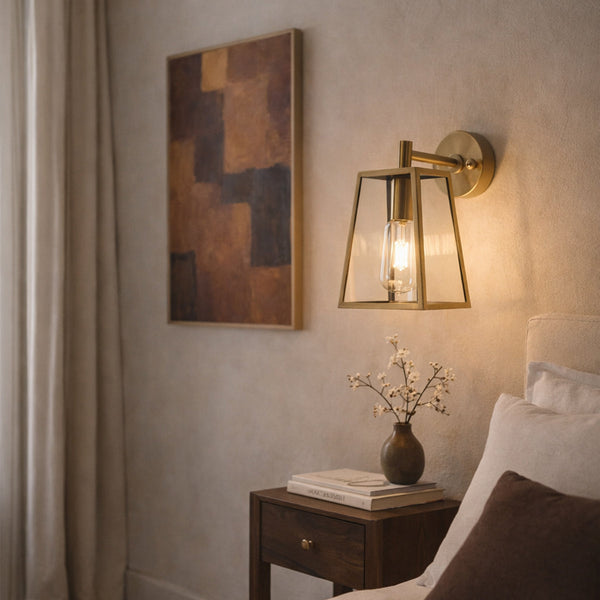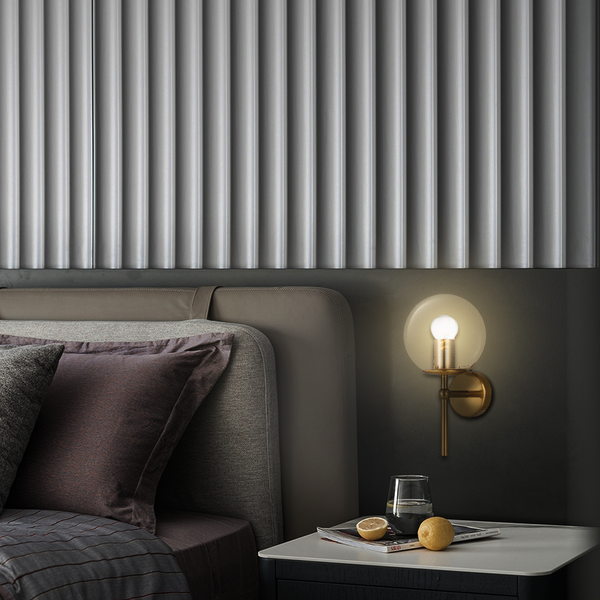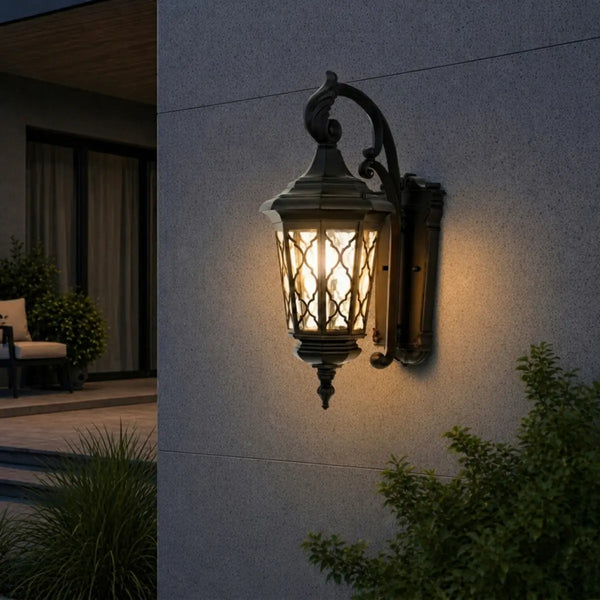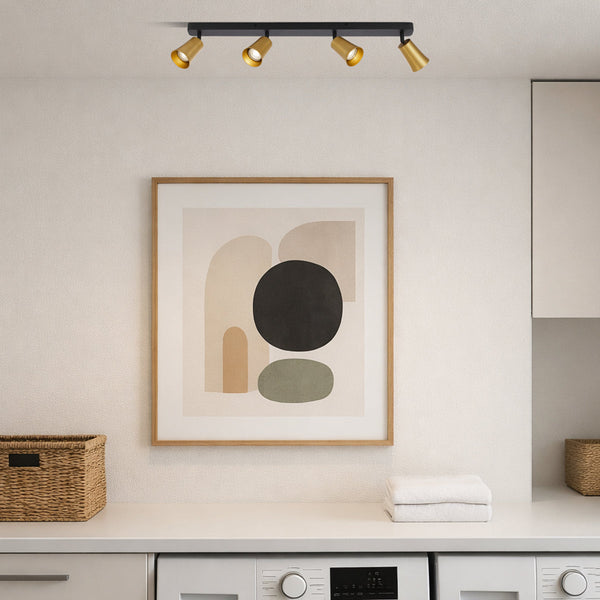
















Good outdoor lighting does three jobs at once: it makes your home safer, extends the hours you can actually use your garden and alfresco, and lifts the whole property after dark. But with so many fittings, wattages and IP ratings on the market, working out the best outdoor lights for your place can feel harder than it should. This 2026 buyer's guide breaks it down the way our team does in the showroom — by the job each light needs to do, the criteria that genuinely matter in the Australian climate, and the brands we trust to last.
Choose your outdoor lights by the job, not the look
The single biggest mistake we see is buying a fitting because it looks good online, then discovering it throws light in completely the wrong direction. Start with the task, and the right fixture type usually picks itself.
Wall lights and up/down lights
The workhorses of exterior lighting. Mounted beside entries, along facades and around alfresco walls, up/down wall lights wash a crisp beam over render, brick or timber and create the architectural "grazing" effect that makes a home look considered. Use warmer beams at entries and consider adjustable-angle heads if your walls have detail worth highlighting.
Spike and garden lights
Spike lights push into garden beds and can be repositioned as plants grow — ideal for uplighting trees, feature walls and dense planting. They're the backbone of a layered garden lights scheme and are commonly run on low-voltage 12V systems so you can add or move fittings without an electrician every time.
Bollards
Bollard lights define paths, driveways and garden edges with a soft pool of light at knee-to-waist height. They're equal parts wayfinding and decoration, and a run of matching bollards instantly reads as a designed landscape rather than an afterthought.
Step and deck lights
Recessed into risers, retaining walls or decking, step lights remove the trip hazards that outdoor spaces are notorious for. Low glare is the priority here — you want to see the edge of the step, not the light source.
Inground uplights
Sat flush with paving or lawn, inground lights uplight columns, trees and facades without any visible fitting during the day. Because they're walked and driven over, drainage and a strong IP rating are non-negotiable.
Flood and security lights
For driveways, side access and the back yard, floodlights deliver broad, bright coverage. Pair them with a motion sensor for security and energy savings — light only appears when something moves, then times out.
Festoon and decorative
Festoon strings are the quickest way to make an alfresco or courtyard feel finished and inviting. Look for weatherproof, connectable sets so you can size the run to your space.
The criteria that actually matter
Once you know the fitting type, these are the specifications that separate a light that lasts a decade from one that fails in two summers.
IP rating
The IP (Ingress Protection) rating tells you how well a fitting resists dust and water. As a rule of thumb: IP44 suits covered or sheltered outdoor spots; IP65 is the sensible minimum for anything exposed to rain and hosing; and IP67 or higher is what you want for inground fittings that may sit in water. When in doubt outdoors, go higher.
316 marine-grade stainless for coastal homes
If you're anywhere near the coast — and much of Sydney is — salt air is the number-one killer of outdoor fittings. Standard 304 stainless and cheaper alloys can pit and streak with rust within a year or two. 316 marine-grade stainless steel is far more corrosion-resistant and is worth the premium for beachside and near-coastal properties. Powder-coated aluminium and quality composites are also good coastal performers.
12V vs 240V
Low-voltage 12V garden systems are safer to work around, flexible to expand and often DIY-friendly for the plug-in components — perfect for spike lights and garden beds you'll tweak over time. Hard-wired 240V fittings suit wall lights, bollards and floodlights where you want permanent, high-output positions. Many gardens use both. Any fixed 240V wiring must be installed by a licensed electrician.
Sensors and controls
Motion sensors are the obvious win for security and driveways. Photocell (dusk-to-dawn) sensors switch lights on at sundown automatically, and in 2026 an increasing share of fittings offer app or smart-home control for scheduling and dimming without extra hardware.
Colour temperature (CCT)
Warm white (around 2700K–3000K) flatters gardens, brick and timber and keeps the mood relaxed — it's our default recommendation for homes. Cooler 4000K reads brighter and more utilitarian, which can suit security and task areas. Many current fittings are tri-colour (CCT-selectable), letting you switch between warm and cool on the fitting itself so you're not locked in.
Match the light to the area
- Entry: Wall lights or up/down fittings either side of the door for a welcoming, secure arrival. Warm white, and enough light to read a face and find keys.
- Garden: Layer spike uplights on trees and feature planting with low bollards or path lights for movement. This is where a 12V system shines.
- Driveway: Bollards or recessed markers to define the edges, plus a sensor floodlight for arrivals and security.
- Alfresco and courtyard: Down-facing wall lights for usable task light, festoon or string lighting for atmosphere, and step lights on any level changes.
Brands we trust
You don't have to gamble on quality. A handful of Australian-focused brands consistently deliver fittings built for our conditions:
- Havit — a go-to for landscape and garden lighting, with strong coastal-rated and 316 stainless options.
- Domus — broad exterior range from wall lights to bollards, with plenty of tri-colour fittings.
- SAL (Sunny Australia Lighting) — dependable, well-priced floods, sensors and everyday exterior fittings.
- Eglo — decorative and architectural wall lights that balance style with weather resistance.
You'll find these across our outdoor lighting range, chosen because they hold up in real Australian yards.
What to look for in 2026
Outdoor lighting has moved on, and a few trends are worth building into your buying decision this year:
- Tri-colour as standard: CCT-selectable fittings are now common, so insist on the flexibility rather than paying for a fixed colour you might regret.
- Higher efficiency, lower wattage: Modern LEDs deliver the same output for less energy — check lumens, not just watts, and look for good efficacy (lumens per watt).
- Smart and app control without a hub: More fittings now offer built-in scheduling, dimming and zoning.
- Warmer, glare-controlled design: Recessed sources and shielded optics reduce harsh glare and light spill — kinder on neighbours and the night sky.
- Coastal-serious construction: 316 stainless and marine-grade finishes are more widely available across price points.
Quick buyer's checklist
- Have I chosen the fitting type by the job it needs to do?
- Is the IP rating right for how exposed the spot is (IP65+ for anything unsheltered)?
- For coastal or near-coastal homes, is it 316 marine-grade stainless or a proven salt-resistant finish?
- 12V, 240V, or a mix — and do I have a licensed electrician for the hard-wired work?
- Do I want motion or dusk-to-dawn sensors on security and driveway lights?
- Warm white for mood, or tri-colour so I can decide later?
- Am I layering (task + accent + path) rather than relying on one bright light?
- Am I buying a brand built for Australian conditions?
Frequently asked questions
What IP rating do I need for outdoor lights?
For sheltered spots like a covered alfresco, IP44 is usually fine. For anything exposed to rain and hosing, choose IP65 as a minimum. Inground fittings that can sit in water should be IP67 or higher.
What are the best outdoor lights for coastal homes?
Look for 316 marine-grade stainless steel, powder-coated aluminium or quality composite fittings, and a strong IP rating. These resist the salt-air corrosion that quickly ruins cheaper materials near the coast.
Are 12V garden lights better than 240V?
Neither is universally better — they suit different jobs. 12V systems are safer to work around and easy to expand, which is ideal for garden beds and spike lights you'll adjust over time. 240V suits permanent, higher-output fittings like wall lights, bollards and floods. Many gardens use both.
What colour temperature should outdoor lights be?
Warm white (2700K–3000K) is the most flattering for homes, gardens and alfresco areas. Cooler 4000K suits security and task zones. Tri-colour fittings let you switch, so you're not locked into one choice.
Do I need an electrician to install outdoor lighting?
Any fixed 240V wiring must be installed by a licensed electrician in Australia. Plug-in low-voltage 12V components are generally DIY-friendly for positioning, though it's worth having the transformer and supply set up correctly.
Ready to light up your outdoors?
From coastal-tough wall lights to full 12V garden schemes, we stock the fittings and brands that stand up to the Australian climate. Browse the full outdoor lighting collection online with fast Australia-wide delivery, or come and see the ranges lit up in person at our Ashfield showroom in Sydney, where our team can help you plan a scheme that suits your home. Great outdoor lighting is one of the highest-impact upgrades you can make — and it's easier than you think to get right.
Shop Outdoor Lighting at Lights For You
Browse our full Outdoor Lighting range, or start with a few popular picks: