
















The living room is where your home does its heaviest lifting. It is the movie den on a Sunday night, the reading corner on a rainy afternoon, the room where guests gather and where the family unwinds after a long day. No single light fitting can do all of that well, which is exactly why the best-lit lounges never rely on one. They layer their light. In this guide we will walk through how to build living room lighting that flexes to every moment, using the three-layer approach that lighting designers swear by.
The three layers of living room lighting
Great living room lighting comes down to three working layers, each doing a different job. Get all three talking to one another and a room instantly feels considered, warm and comfortable rather than flat and over-lit.
1. Ambient light: the ceiling layer
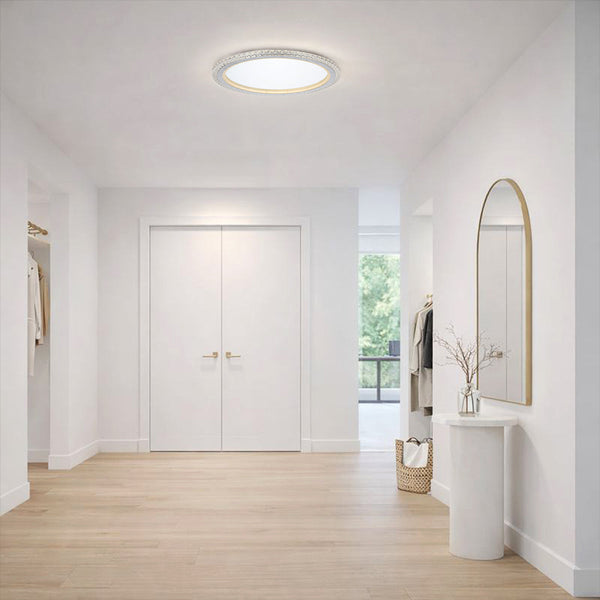
Ambient light is your base layer, the general wash that lets everyone move around safely and see one another. In most Australian lounges this comes from a central ceiling light, a set of recessed downlights, or a combination of the two. Downlights are wonderfully discreet and even, but on their own they can feel a little clinical, like an office. That is why we always recommend pairing them with a central fixture or the softer layers below.
If you are starting from scratch or planning a renovation, a mix of dimmable downlights around the perimeter and a statement piece in the centre gives you the most flexibility. Browse the range of indoor ceiling lights to see how flush mounts, semi-flush fittings and pendants can anchor the room.
2. Task light: the reading layer
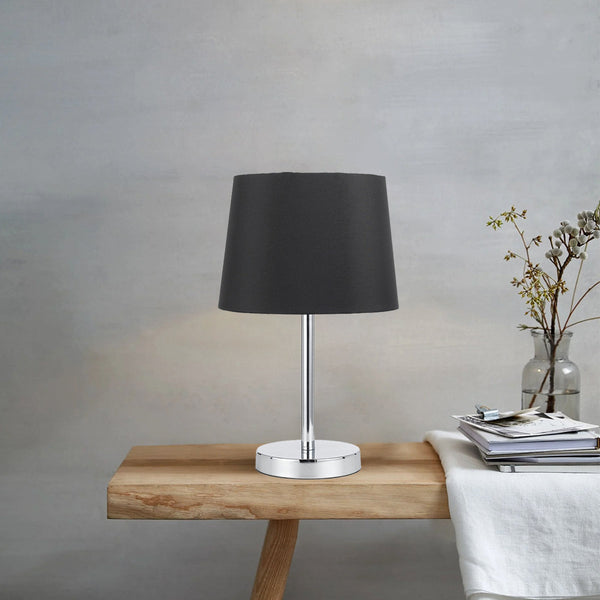
Task lighting is focused, purposeful light for the things you actually do: reading a book, doing a crossword, knitting, or working on the laptop from the sofa. A floor lamp beside your favourite armchair or a table lamp on a side table delivers this beautifully, putting light exactly where your hands and eyes need it without lighting the entire ceiling.
The trick is placement. A reading lamp should sit slightly behind and to the side of the chair so the light falls over your shoulder onto the page, not into your eyes. Adjustable arms and swing-arm designs earn their keep here.
3. Accent light: the feature layer
Accent lighting is the finishing touch, the layer that adds depth, mood and a sense of drama. Think wall lights framing a fireplace, a picture light over artwork, or an uplight in the corner grazing a textured wall or a leafy indoor plant. This is the layer people most often skip, and it is the one that separates a room that looks nice from a room that feels genuinely inviting at night.
Statement pendants and chandeliers
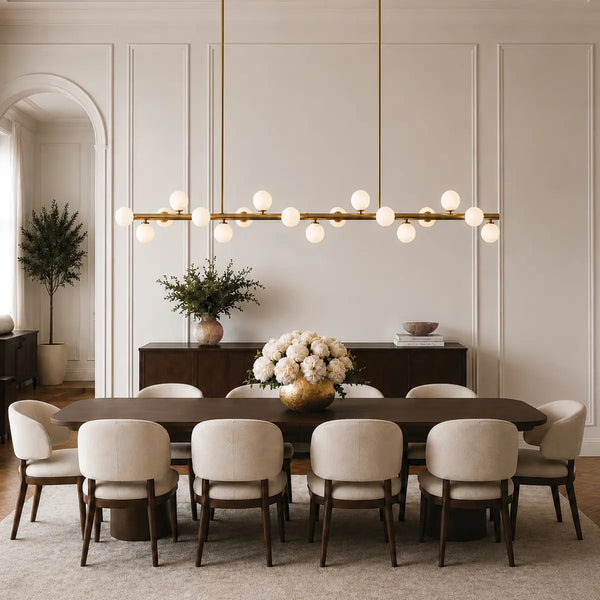
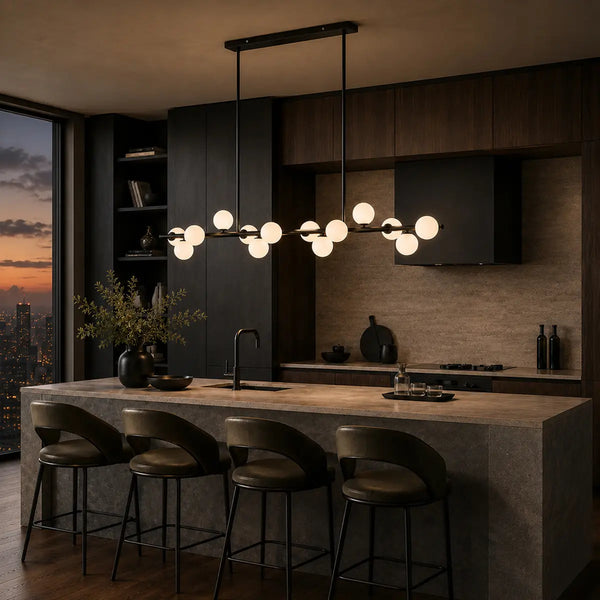
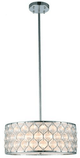
Every living room deserves a hero. A statement pendant or a chandelier gives the room a focal point and sets the tone for the whole space, whether that is coastal and relaxed, classic and elegant, or sleek and contemporary. Brands we stock such as Telbix, Domus, Mercator and Oriel offer everything from sculptural glass pendants to modern linear fittings and grand traditional chandeliers.
Scale matters more than anything. In a living room, a fitting that feels a touch too big usually looks better than one that is too small and gets lost. As a rough starting point, measure your room in metres, add the two dimensions together, and that figure in centimetres is a sensible diameter for a central fixture. Hang it high enough that nobody walks into it, but low enough to feel like it belongs to the seating area rather than floating near the ceiling.
Floor and table lamps for warmth
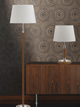
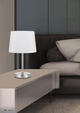
If ceiling lights are the bones of your scheme, lamps are the soul. A pair of table lamps flanking a sofa, or a slim floor lamp arching over a reading chair, brings light down to human height where it feels most flattering and cosy. Because they sit at eye level, lamps do more for the mood of a room than almost anything else you can switch on.
Use them in layers too. A couple of well-placed lamps can carry an entire evening on their own, letting you switch the harsher overhead lights off completely once the day winds down. Explore floor lamps for pieces that combine a functional reading light with a sculptural presence in the corner of the room.
Wall lights
Wall lights are the quiet achievers of living room lighting. Mounted either side of a fireplace, along a feature wall, or beside a media unit, they add a warm horizontal glow that ceiling lights simply cannot reach. Uplights wash the ceiling and make a room feel taller; downlights create pools of light and a more intimate mood. Because they draw the eye outward to the edges of the room, wall lights make even a modest lounge feel more spacious and finished.
Dimming and smart scenes
If you take only one idea from this guide, make it this: put your living room lights on dimmers. Dimming is the single most transformative thing you can do for a lounge. The same downlights that need to be bright for a game of cards on Friday night should drop to a gentle glow for a movie an hour later. Dimmers let one room become many.
Smart bulbs and smart switches take it further, letting you save scenes such as Movie, Reading or Entertaining and recall them with a tap or a voice command. Set your ambient layer low, your accent layer warm, and your task lamps just where you need them, then save it once and enjoy it every night. It is worth deciding early which fittings you want on smart control, as it can influence the globes and switches you choose.
Colour temperature for lounges
Colour temperature, measured in Kelvin, is what makes a light feel warm and golden or crisp and cool. For living rooms, warmer is almost always better. Aim for globes around 2700K to 3000K, the range that gives that relaxed, welcoming glow reminiscent of a setting sun or candlelight. Cooler light above 4000K has its place in kitchens and workspaces, but in a lounge it can feel stark and unrestful.
Keep your colour temperature consistent across the room so the space reads as one cohesive scheme rather than a patchwork of warm and cool pools. If your fittings use dedicated globes, buying them all in the same warm white is an easy way to keep everything harmonious.
Ideas by layout
Open-plan living
Open-plan spaces need light that defines zones without walls to help. Use a statement pendant or a cluster of pendants to mark the lounge area, keep downlights on separate circuits so the living zone can dim independently of the kitchen, and add a floor lamp to anchor the seating. The goal is for the sofa area to feel like its own room even though it shares the floor with everything else.
The TV and media area
Watching a screen in a fully dark room is tiring on the eyes, and a blaze of downlights causes glare and reflections. The sweet spot is soft, indirect bias lighting behind or beside the television: a dimmed wall light, a lamp to one side, or an accent light grazing the wall behind the screen. It reduces eye strain and makes the picture look better, all while keeping the mood relaxed.
The reading nook
A dedicated reading corner is a small luxury that costs very little to light well. Position an adjustable floor lamp or a swing-arm wall light beside the chair so the beam lands on the page. Add a warm globe and a dimmer, and you have a spot that is equally good for an afternoon novel or a nightcap.
Get the look: a quick checklist
- Layer three types of light: ambient (ceiling), task (reading) and accent (feature).
- Choose one hero fitting, a statement pendant or chandelier, scaled generously to the room.
- Add at least two lamps at eye level for warmth and flexibility.
- Use wall lights to push light to the edges and add depth.
- Put as much as possible on dimmers, and consider smart control for saved scenes.
- Stick to warm white globes, around 2700K to 3000K, and keep it consistent.
- Set up your TV area and reading nook with their own soft, focused light.
Frequently asked questions
How many light sources should a living room have?
As a guide, aim for at least three separate sources across the three layers: your ceiling light or downlights for ambient, one or two lamps for task and warmth, and an accent such as a wall light. More layers give you more control over mood, so many well-lit lounges happily run five or six.
What colour temperature is best for a living room?
Warm white, in the 2700K to 3000K range, suits most living rooms. It creates a relaxed, welcoming atmosphere. Save cooler tones for task-heavy rooms like kitchens and studies.
Do downlights alone work in a lounge?
They can provide even general light, but on their own downlights often feel flat and a little clinical. Pairing them with lamps, wall lights or a statement pendant, and putting them on a dimmer, transforms the feel of the room.
Should living room lights be on dimmers?
Absolutely. Dimming is the easiest way to let one room shift between bright and practical for daytime activities and soft and cosy for evenings. It is one of the highest-impact upgrades you can make.
How big should my living room pendant or chandelier be?
Add your room's length and width in metres, and use that number in centimetres as a rough diameter for a central fitting. When in doubt, size up slightly, as fittings tend to look smaller once they are installed overhead.
Ready to light your living room?
Whether you are refreshing a single corner or lighting a whole open-plan space, layering is the secret to a lounge that feels as good as it looks. Explore our full range of indoor ceiling lights and pair them with lamps and wall lights to build your own scheme. We offer fast delivery Australia-wide, and if you would like to see and compare fittings in person, our friendly team is waiting to help at the Lights For You showroom in Ashfield, Sydney. Come and find your perfect glow.
Shop Indoor Ceiling Lights at Lights For You
Browse our full Indoor Ceiling Lights range, or start with a few popular picks: